If you are scoping a distribution management system, you are really deciding one of three things: buy a standalone DMS, use the distribution module already in your ERP, or build something custom. The short answer is that the ERP module is enough when your distribution is simple and direct, a packaged DMS is the right call for most businesses running a real dealer or channel network, and building is justified only when your scheme logic or channel structure is unusual enough that no product fits, or when distribution is core enough to your competitiveness to own outright. This guide is the long answer: what a DMS actually controls, how it compares to your ERP module, why sectors like FMCG break generic systems, and how to make the build-buy-extend call without being sold to. If you already know you need a partner, our distribution management software practice is where this leads, but read on first.
What a Distribution Management System Actually Controls
A distribution management system manages the flow of goods, orders, and money across your channel, from your factory or brand out through distributors and dealers to the retail outlets that sell to end customers. That is a different job from the systems it is often confused with.
- Primary and secondary sales. Primary sales are what you invoice to your distributors. Secondary sales are what those distributors sell onward to retailers. Most of the value in a DMS is in capturing secondary sales accurately, because that is what tells you what is really happening in the market, and it is the data your ERP almost never sees.
- Channel stock visibility. Knowing how much stock sits at each distributor and, ideally, each outlet, so you can prevent both stock-outs and the returns that come from overloading the channel.
- Trade schemes and claims. Configuring the discounts, slabs, and promotions you run through the channel, and settling the claims distributors raise against them without weeks of manual reconciliation.
- Order-to-cash across the channel and field-force and route management, so the salesperson visiting outlets follows an efficient beat and can take orders on the spot.
Two systems are routinely mistaken for a DMS. A warehouse management system (WMS) manages the inside of a warehouse: put-away, picking, packing, and location-level inventory. We cover that separately in the power of warehouse management systems. A transport management system (TMS) manages freight movement. A DMS sits above both, managing the channel itself. If you already run a WMS, it does not remove the need for channel-level distribution management; the two are complementary, with the WMS feeding accurate stock into the DMS.
DMS vs the Distribution Module in Your ERP
This is the comparison most buyers actually need, because you probably already own an ERP and the natural question is whether its distribution module is enough. The honest answer is that it depends on how much of your value lives in the channel.
An ERP distribution module is strong where the work is close to the ERP’s core: primary sales, invoicing, and order-to-cash. It gets weaker the further you move toward the retail edge, because that edge involves offline field operations, enormous transaction volumes from small outlets, and scheme logic that changes constantly. Those are not the ERP’s home ground.
| Capability | ERP distribution module | Standalone DMS |
|---|---|---|
| Primary sales / order-to-cash | Strong, it is the ERP’s core | Strong, and reconciles back to the ERP |
| Secondary sales capture | Weak, rarely reaches the retail edge | Core purpose, built for the retail edge |
| Offline field operations | Usually online-only | Offline-first mobile with sync |
| Dealer onboarding & hierarchy | Rigid, often a change request | Designed for routine change |
| Trade schemes & claims | Basic discounting | Complex slabs, promotions, claim settlement |
| Cost profile | Bundled, low marginal cost if owned | Additional system, priced by scale |
The pattern is clear: if your distribution is a simple, direct model with a handful of large customers, the ERP module is usually enough and adding a DMS is over-engineering. If you run a deep channel with schemes, thousands of outlets, and field sales, the ERP module will leave you managing the hardest part in spreadsheets, and a DMS running alongside the ERP earns its place. Whichever way you go, the integration between the two is not optional; the DMS must reconcile to the ERP for invoicing, inventory, and the ledger, the same discipline we describe for ERP and commerce integrations.
Why FMCG Distribution Breaks Generic Systems
FMCG is the sector where the ERP-module approach most often fails, because it stacks up every condition that generic systems handle badly at once.
- Scheme and claim complexity. FMCG runs on constant trade promotions: slab discounts, volume schemes, seasonal offers, all changing month to month. Distributors raise claims against them, and settling those claims accurately is a major source of disputes and manual effort. A system that cannot model the scheme cannot settle the claim cleanly.
- High SKU churn. New products, pack sizes, and variants arrive constantly, and the system has to absorb that churn without a re-implementation.
- A very long tail of small outlets. Distribution reaches thousands, sometimes hundreds of thousands, of small retailers, each generating tiny, frequent transactions. Capturing accurate secondary sales at that scale is the defining challenge.
- Patchy last-mile connectivity. The salesperson standing in a small shop often has no reliable signal, so the mobile app has to work fully offline and sync later.
Consider a composite drawn from this kind of engagement: a pipes and building-materials manufacturer running distribution through more than 400 dealers. Its ERP handled invoicing to those dealers cleanly, but it had no visibility of what the dealers sold onward, no reliable way to settle the schemes it ran, and a field team recording orders on paper. The gap was not in the ERP’s core; it was everything past the dealer invoice. That is the shape of the FMCG problem, and it is why a purpose-built DMS exists.
Cloud vs On-Premise for Distribution Networks
Teams often frame this as a hosting-preference question. For distribution it usually is not. The decision that actually matters is offline capability, because your field force and your smallest outlets operate where connectivity is unreliable, and an order that cannot be taken offline is an order lost.
The common answer is a cloud back end paired with an offline-first mobile client: the salesperson captures orders and secondary sales on the device regardless of signal, and the app syncs to the cloud when a connection returns. This is what most searches for an “online distribution management system” are really after, a system that is centrally managed and always current for head office, while remaining usable at the edge when the network is not. Pure on-premise deployment is generally chosen only where specific data-residency or legacy-integration constraints demand it, not as a default. The question to press any option on is not “is it cloud”, it is “what exactly happens when my salesperson has no signal for three hours.”
Build, Buy, or Extend: A Decision Framework
There is no universally right answer here, and any partner who gives you one without understanding your channel is selling, not advising. Three scenarios, with the conditions that favour each:
Buy a packaged DMS when your distribution model is reasonably standard and a product fits without heavy customisation. You reach value faster and cheaper, you inherit years of edge-case handling, and you avoid maintaining software that is not your core business. This is the right answer for a large share of mid-market distributors, and it should be the default you argue yourself out of, not into.
Extend your ERP module when your channel is genuinely simple, the gaps are small, and you value a single system over best-of-breed capability. This works when secondary sales and schemes are light, and it keeps your data in one place.
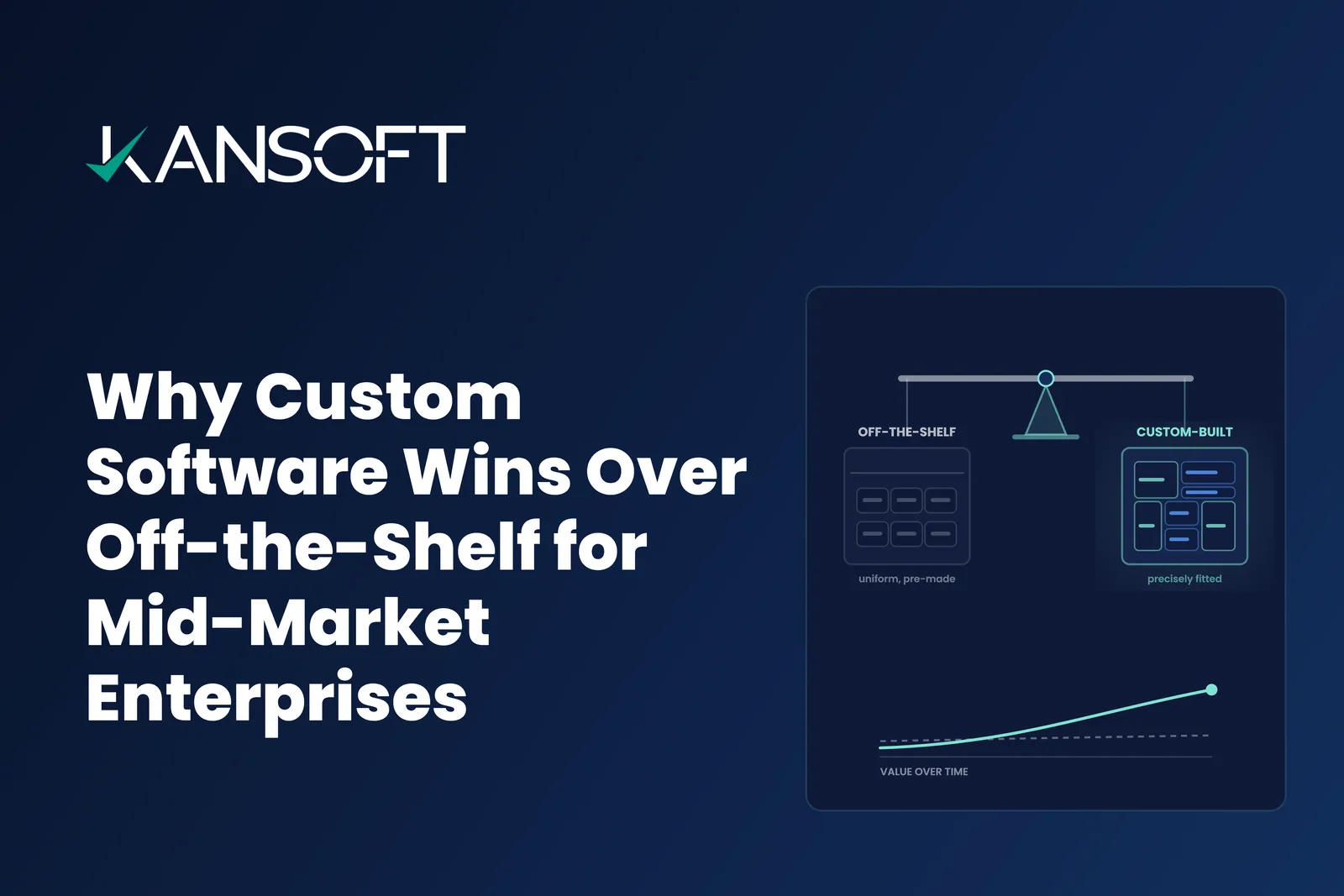
Build or heavily customise when your scheme logic, channel structure, or integration requirements are unusual enough that packaged products would force you to change how you operate, or when distribution is a core competitive capability you want to own outright. Building is a real option, but it carries the full cost of ownership over the system’s life, not just the initial delivery. We lay out that trade-off in general terms in custom software vs off-the-shelf; it applies directly here.
The most common mistake is treating build as a way to avoid a product’s limitations without accounting for the years of maintenance, edge cases, and change that the product already absorbs. The second most common is buying a product that does not fit the channel and then customising it so heavily that you have paid for both a product and a build.
What to Ask a DMS Vendor or Build Partner
Whichever direction you lean, these are the questions that separate a system that fits from one that demos well. Use them on packaged vendors and build partners alike.
- How do you capture secondary sales from thousands of outlets? This is the hardest part and the clearest test of whether they understand distribution.
- Does the mobile app work fully offline, and how does sync handle conflicts? Press for specifics, not a yes.
- How are trade schemes and claims configured, and who maintains them after go-live? If every scheme change needs the vendor, you have a bottleneck.
- How do you handle dealer and distributor onboarding and channel-hierarchy changes? These must be routine operations, not projects.
- What is the real integration path to our ERP and finance systems? Ask to see it, not hear about it.
- How is the system priced as our outlet and SKU counts grow? Model your three-year scale, not today’s.
- What reporting do field users and management get out of the box? Both audiences need usable views without a separate BI effort.
- Who owns the data and the code, and what is the exit path? Ownership and portability decide how locked in you are later.
A partner who answers these concretely, and tells you honestly when buying a product would serve you better than building, is the one worth shortlisting.
Scoping a distribution management system?
Bring us your channel: the network size, the scheme complexity, and where your ERP falls short. We'll tell you plainly whether to buy, extend, or build, and what it takes to fit your distribution rather than change it.
The Bottom Line
A distribution management system is worth its cost when the value in your business lives in the channel, in secondary sales, schemes, and the long tail of outlets your ERP never sees. If that describes you, the question is not whether to manage distribution properly but whether to buy, extend, or build, and the honest answer for most businesses is to buy unless the fit is genuinely poor. Scope the channel first, be specific about where your ERP module stops, and choose the option that fits your distribution instead of forcing your distribution to fit the software.