Cloud adoption is no longer the milestone — it’s table stakes. The differentiator now is architecture: how well an enterprise has engineered its cloud environment for governance, cost, and the AI and real-time-analytics workloads coming next. Industry indicators point the same way; research suggests nearly 90% of organizations will operate hybrid cloud environments within a few years, and investment is shifting decisively toward AI-intensive workloads. Yet most cloud estates were built to host traditional systems, not to scale intelligence on top of them.
This is a cloud architecture assessment guide: how to evaluate where your foundation actually stands, the maturity model to place yourself on, the pillars of an AI-ready cloud foundation — and, honestly, where these programs succeed and where they fail. It sits deliberately at the cloud-foundation layer; the AI strategy above it and the MLOps that run models on it are their own disciplines, cross-linked throughout.
Where Enterprise Cloud Programs Underdeliver at the Architecture Level
Cloud adoption has expanded fast, but many programs fall short — and at the architecture layer the causes are consistent. Estimates put wasted cloud spend at 27–32% due to a lack of governance and workload optimization. The recurring architecture-level failure modes:
- Migration executed without an enterprise architecture design — workloads relocated before any target architecture existed, producing fragmentation and duplicated pipelines.
- AI initiatives launched on un-modernized data platforms — models starved by siloed, ungoverned data.
- Fragmented hybrid governance across business units — decentralized provisioning with no unifying operating model, driving resource sprawl.
- Cost optimization addressed only after scale — governance retrofitted once the bill is already large.
The common thread is a migration-first mindset that treats the cloud as a destination rather than an architecture. (The broader failure patterns across an entire migration program — sequencing, cutover, org readiness — are their own topic, covered in why most cloud migrations fail.)
The Cloud Architecture Maturity Model
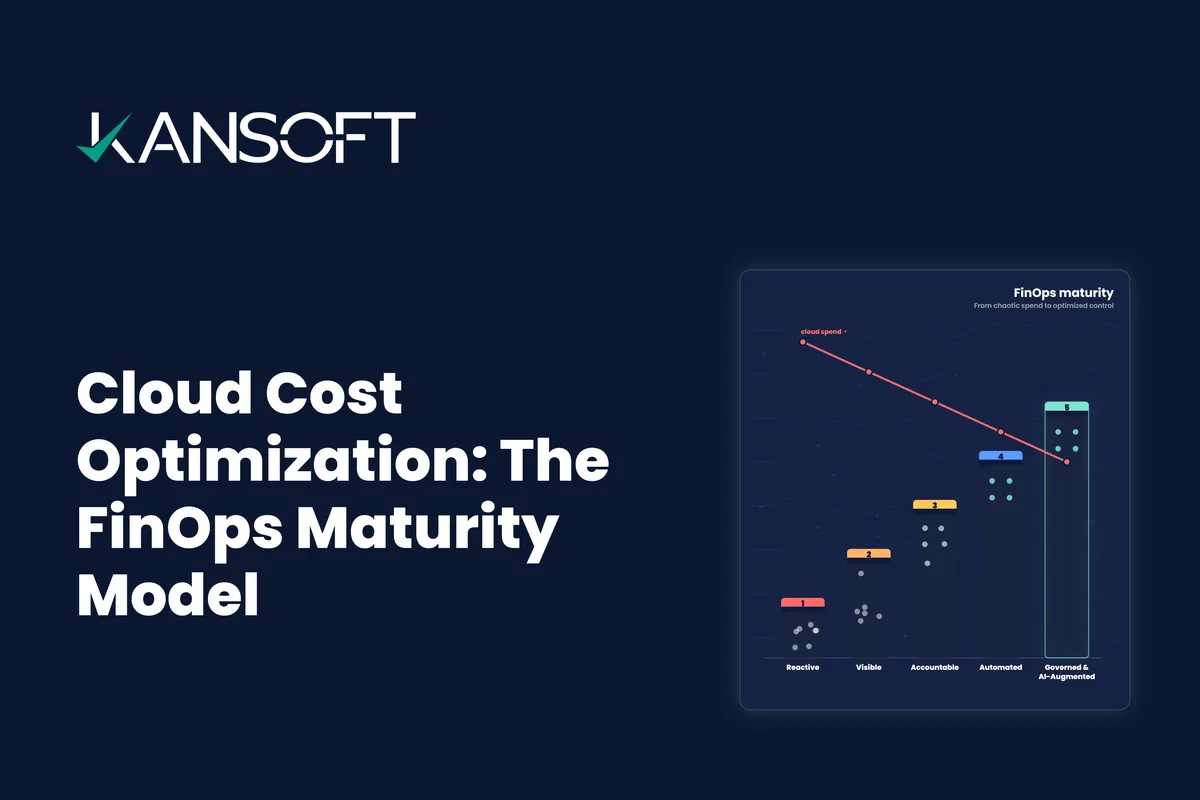
The fastest way to make an assessment actionable is to place your estate on a maturity curve. Most enterprises recognize themselves at one of four stages — and the stage tells you where to invest next.
Isolated workloads in the cloud — no integration, no unifying architecture.
Multi-platform adoption without alignment — fragmentation and cost sprawl set in.
Unified governance and integration layers connect systems into a coherent platform.
Unified data, elastic compute, and automated governance let AI scale across the enterprise.
The assessment’s job is to locate you honestly → then invest to reach Stage 4 — AI-Ready, where scaling each new workload stops being a re-architecture.
What a Cloud Architecture Assessment Actually Evaluates
A useful assessment scores the estate on the dimensions that determine whether it can carry future workloads — not just whether it “runs in the cloud”:
- Data platform maturity — is data unified, governed, and integration-ready, or siloed across systems?
- Application & integration architecture — API-driven and event-driven, or point-to-point and brittle?
- Hybrid & multi-cloud governance — one operating model, or decentralized provisioning per business unit?
- Cost & operating model — workload-aligned with FinOps in place, or sprawl discovered on the invoice?
- Workload readiness — can the infrastructure absorb high-volume AI and real-time analytics without re-architecture?
The output is a prioritized modernization roadmap: what’s ready, what constrains scale, and what to fix first.
The Core Pillars of an AI-Ready Cloud Foundation
Reaching Stage 4 rests on four engineering pillars.
Unified, governed data platforms and integration pipelines that make enterprise-wide analytics and AI possible in the first place.
Microservices and cloud-native application design that improve scalability, integration, and deployment agility.
Orchestration across environments that maintains governance and performance consistency rather than fragmenting them.
Workload-aligned infrastructure, automated governance enforcement, and continuous cost optimization that hold performance while controlling spend.
Enterprises that reach architecture readiness consistently see faster modernization velocity, better data accessibility, less infrastructure redundancy, and more predictable cost models. On the cost pillar specifically, the deeper decision set — instance strategy, workload placement, and the cost trade-offs unique to AI workloads — is its own topic, covered in cloud computing architecture for AI workloads: 5 decisions that control costs.
Where does your enterprise cloud architecture stand today?
Download the Enterprise Cloud Architecture Readiness Framework
The Foundation Is Necessary — But Not Sufficient
Here’s the honest boundary of this piece. An AI-ready cloud foundation is what lets intelligence scale — but it doesn’t, on its own, produce AI outcomes. Two layers sit above it:
- The AI strategy layer — turning a mandate into scored objectives, a readiness assessment, and a path to production. That’s the subject of the enterprise AI adoption framework.
- The ML operations layer — actually running models in production reliably: CI/CD for ML, observability, and drift monitoring, on dedicated MLOps and serving infrastructure. The full lifecycle is covered in from pilot to scale: a CTO’s guide to production-grade AI with MLOps.
Think of it as a stack: strategy on top, ML operations in the middle, and this — the cloud foundation — at the base. Get the base wrong and everything above it wobbles; get it right and the layers above have somewhere solid to stand.
Not sure which maturity stage you're on?
We run a structured cloud architecture assessment, place your estate on the maturity model, and return a prioritized roadmap to an AI-ready foundation — with the cost model to match.
From Cloud Adoption to Cloud Advantage
Cloud adoption stopped being the defining milestone of transformation some time ago. Advantage now depends on how effectively you engineer the environment to support scalable intelligence, regulatory resilience, and long-term efficiency. Shifting from a migration-centric mindset to an architecture-driven one — assess honestly, place yourself on the maturity model, invest in the pillars that move you toward AI-ready — is what turns a cloud estate from a cost center into the foundation the rest of your AI and data ambitions stand on.
Build the foundation the rest of your AI strategy depends on
Bring us your current cloud estate. We'll assess its architecture, show you where it constrains scale, and engineer the modernization path to an AI-ready foundation.