If you are a CTO or head of architecture weighing your technology stack, the question you actually face is not “what is the best stack in 2026.” That question belongs to developer media and produces listicles. Your question is narrower and harder: is the stack we run worth changing, and if so, to what, how, and at what cost? This guide answers that. It covers what is genuinely shifting in enterprise stacks, the five criteria that should decide any stack choice, the honest signals that justify a replacement and the ones that do not, how to migrate a web application without a rewrite, and the costs that never appear on a licence quote. The short version: most stacks that feel dated do not need replacing, and the ones that do are usually best migrated incrementally, not rebuilt.
What’s Actually Changing in Enterprise Stacks
Set aside language-popularity charts; they describe the developer population, not enterprise constraints. From what we see across modernization engagements, four shifts actually matter for stack decisions right now.
- AI-assisted delivery has become a stack-value factor. Well-documented, widely-used languages and frameworks get a real productivity multiplier from AI coding tools, because those tools perform best on technologies with deep public corpora and mature ecosystems. A niche stack now carries a real penalty: less leverage from AI-assisted delivery across the whole lifecycle. This is new, and it is underweighted in most stack debates.
- Consolidation is beating sprawl. The polyglot, best-tool-for-every-job architecture that looked sophisticated a few years ago is now a staffing and operational liability. Enterprises are deliberately narrowing to fewer, better-integrated technologies their teams can actually operate.
- Managed and cloud-native services are the default floor. Running your own message brokers, databases, and orchestration is increasingly undifferentiated cost. The stack decision now includes how much of the platform you deliberately choose not to operate.
- Security and compliance have moved into the choice itself. For regulated enterprises, a stack’s security posture and compliance fit are now first-class selection criteria, not something addressed after the framework is picked.
None of these say “adopt the newest thing.” They say the value of a stack is now decided more by ecosystem, operability, and staffing than by raw technical capability, which most stacks have in abundance.
The Five Criteria That Decide an Enterprise Stack
When we help a client evaluate a stack, the decision comes down to five criteria. Notice that “modern” is not one of them.
- Talent availability. Can you hire and retain engineers for this stack, at a cost and speed your business can sustain, in the markets you operate in? A technically excellent stack you cannot staff is a slow-motion liability. This is the criterion that most often turns out to be the binding constraint.
- Vendor and ecosystem longevity. Will the technology, its vendor, and its tooling still be supported and actively evolving in five years? This is also where the AI-assisted-delivery factor lives: a stack with a deep ecosystem gets more AI leverage, which is a longevity signal in its own right.
- Integration surface. How cleanly does it connect to the systems, data, and services you already run? A stack that is excellent in isolation but forces custom integration everywhere creates debt that outlasts the decision.
- Operating cost at scale. What does it cost to run, scale, and maintain at your real volume, including the cloud bill, the licences, and the people? The cloud layer of the stack is often where operating cost is actually decided.
- Security and compliance posture. Does it meet your security and regulatory requirements by design, or would you be retrofitting them? For regulated sectors this can move from a criterion to a gate.
The discipline is to score a candidate stack against the criteria that actually constrain you, and to be honest that for most enterprises the binding constraints are talent and integration, not technical capability. “Modern” is a description, not a business outcome.
Signals It’s Time to Upgrade, and Signals It Isn’t
This is the section most stack articles skip, because it argues against the change they are implicitly selling. It is also the most useful.
Genuine signals to replace or modernize:
- You cannot hire for it, or the people who can maintain it are retiring out of the market.
- The vendor has ended or announced end of support, so security patches are drying up.
- Security exposure is rising and cannot be mitigated within the current stack.
- It physically cannot integrate with systems the business now depends on.
- Operating cost is climbing faster than the value the system delivers.
Signals that are not reasons to replace:
- It looks dated or uses an unfashionable language. Fashion is not a constraint.
- A competitor uses something newer. Their constraints are not yours.
- A team member wants to work with a different technology. Real, but not a business case.
- It occasionally frustrates developers. Every stack does.
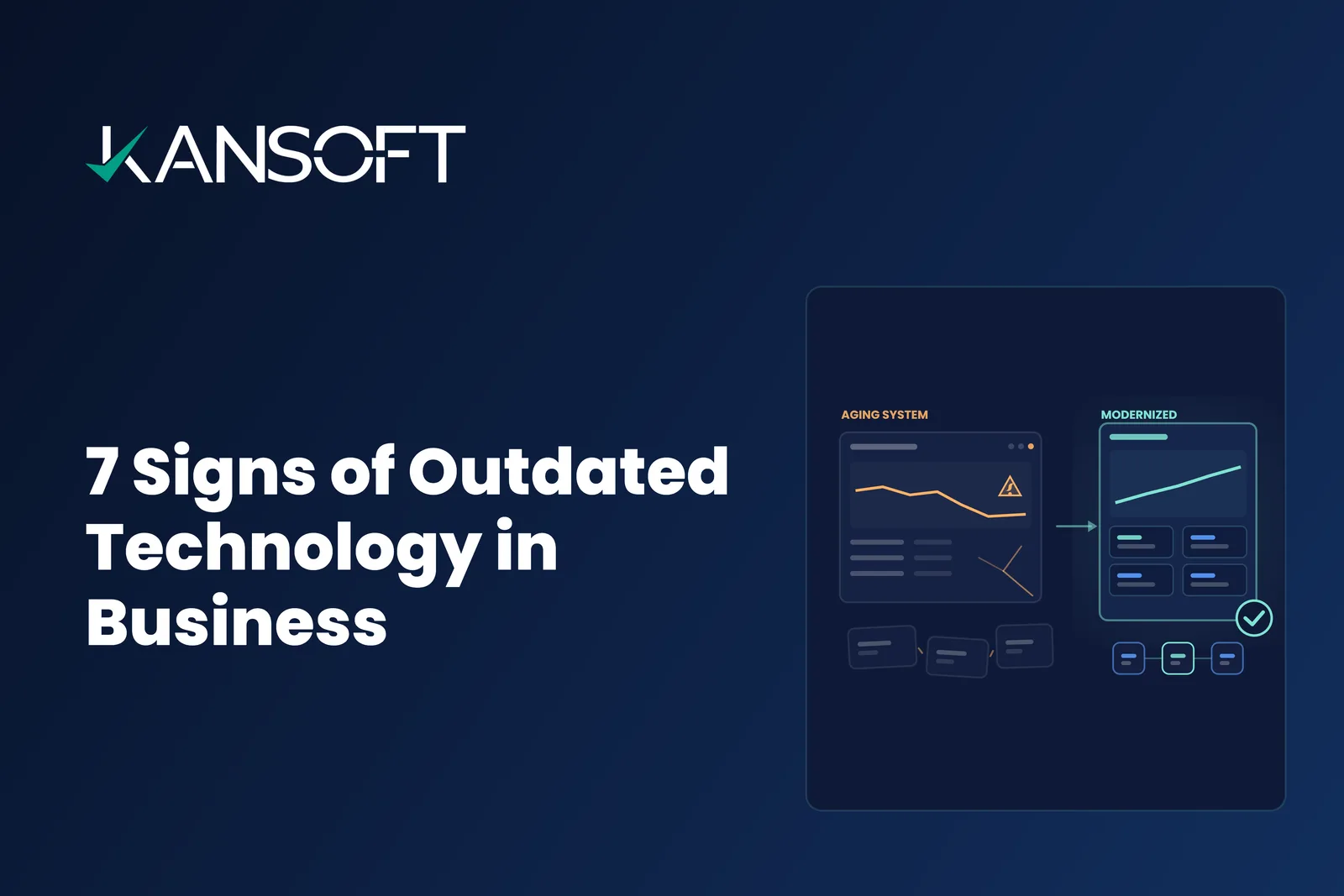
A useful test: a stack that is unfashionable but stable, staffable, secure, and integrated is doing its job, and replacing it spends real budget and risk for cosmetic gain. We have talked more than one client out of a rewrite they were emotionally committed to because the honest read of the five criteria said the existing stack was fine. If you want a structured way to make this call, our seven signs of outdated technology is a companion checklist.
Migrating a Web Application Stack Without a Rewrite
When the criteria genuinely point to change, the instinct to rebuild from scratch is the one to resist. A big-bang rewrite is the highest-risk path: you freeze feature delivery, carry two roadmaps, and bet the business on a cutover. Incremental migration is almost always the better route.
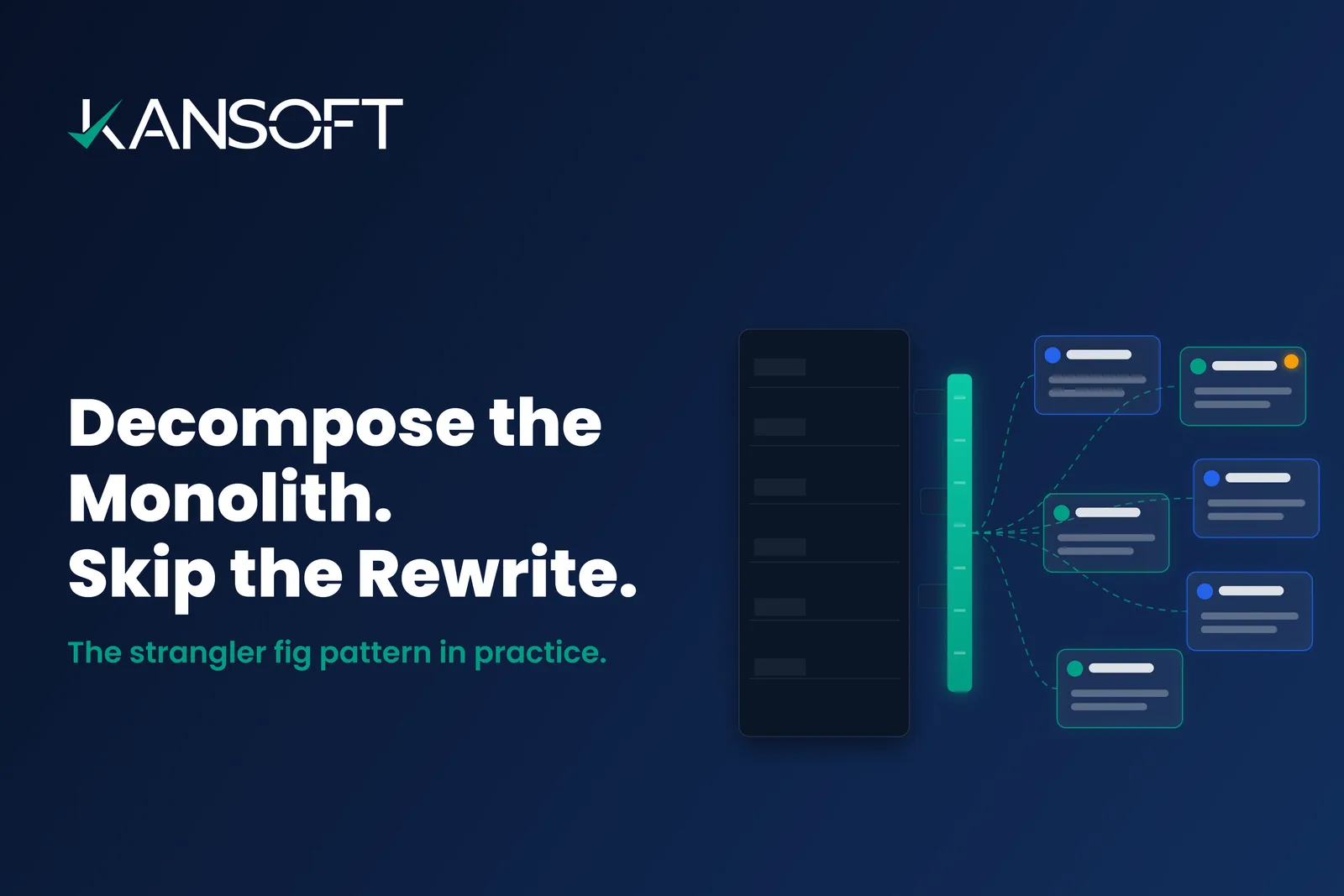
- Strangler fig. Stand up new components alongside the old system and route traffic to them as they are ready, so the old stack shrinks gradually rather than being switched off in one event. This is the default we reach for; it is covered in depth in the strangler fig pattern guide.
- API-first decoupling. Put stable interfaces around the pieces you intend to replace, so you can swap the implementation behind them without the rest of the system noticing.
- Framework-by-framework. Migrate one layer or module at a time, proving each before moving on.
The pattern holds across technologies. A .NET Framework application moving to modern .NET follows it, as we lay out in the .NET migration guide, and even a genuine legacy rebuild like Classic ASP to ASP.NET Core is best sequenced incrementally rather than attempted in one cutover. The technology changes; the discipline of migrating without stopping the business does not.
What a Stack Decision Costs Beyond Licences
The licence or subscription is usually the smallest number in a stack change, and the one everyone quotes. The costs that actually decide whether the migration was worth it sit elsewhere.
Consider a composite drawn from this kind of engagement: a mid-market business running a decade-old monolith decides to modernize its stack. The tooling cost is modest. Then the real bill arrives: retraining the existing team or hiring for the new stack, running the old and new systems in parallel through a long cutover, the productivity dip while everyone climbs the learning curve, and the integration work to reconnect every system that touched the old one. None of that is on the licence quote, and together it dwarfs it.
Budget for four things beyond tooling and delivery:
- Retraining and hiring for the new stack, and the time before the team is fluent.
- Parallel running of old and new during the transition, which means paying for both.
- The productivity dip that every migration causes before it pays back.
- Re-integration of every system that depended on the component you changed.
A stack decision costed honestly against these often confirms that incremental migration, spreading the cost and risk over time, beats a rewrite that front-loads both. It can also confirm that the right move this year is to keep the stack and fix the specific constraint instead.
Weighing a stack change?
Bring us your current stack and the constraint pushing you to change it. We'll score it against the five criteria, tell you honestly whether replacement is justified, and if it is, map an incremental path that keeps the business running.
The Bottom Line
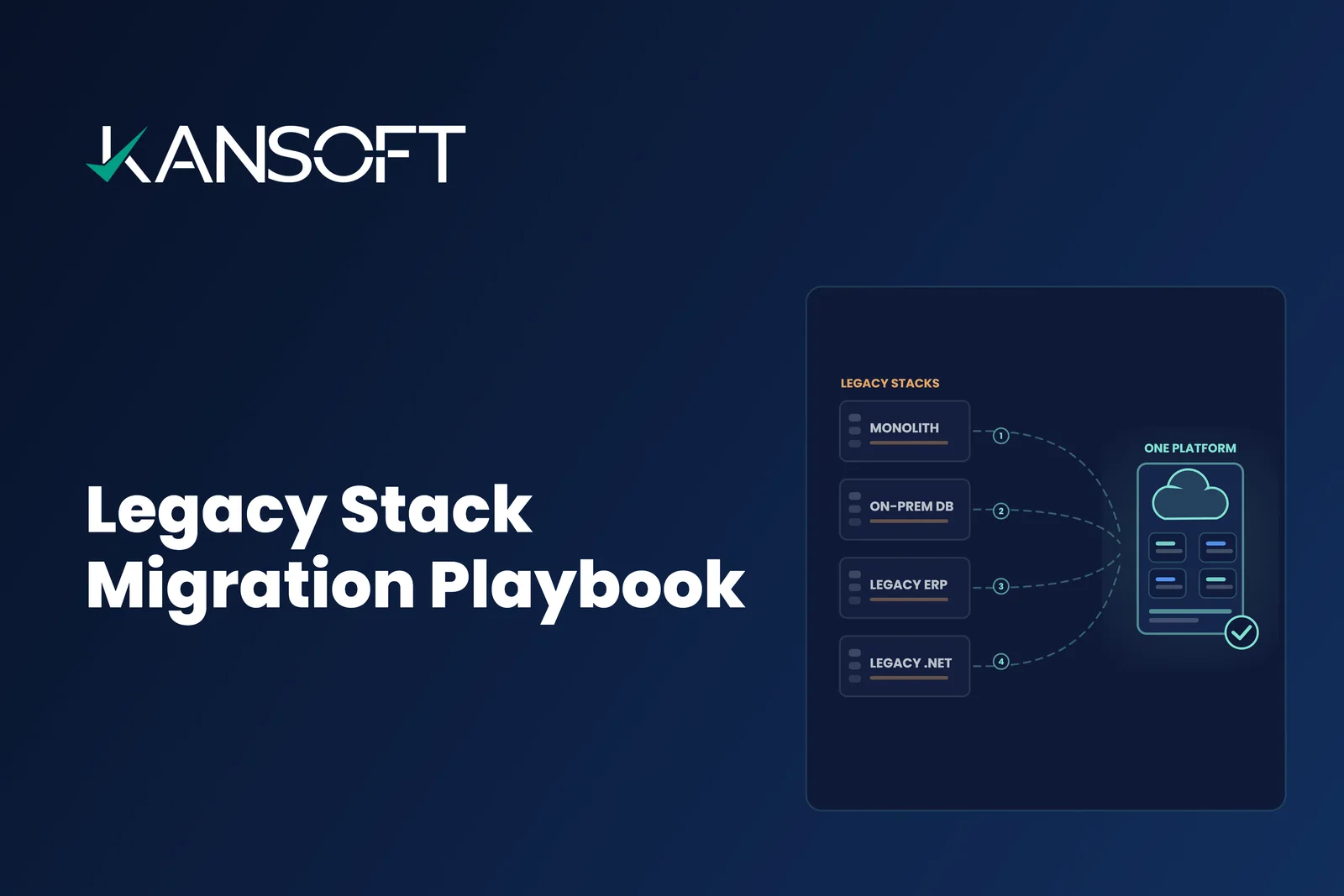
Choosing an enterprise tech stack in 2026 is not a search for the best technology; it is a judgement about constraints. Score any candidate against talent, ecosystem longevity, integration, operating cost, and security, and be honest that for most enterprises the binding limits are people and integration, not capability. Replace a stack when it actively blocks the business, keep it when it is merely unfashionable, and when you do change, migrate incrementally rather than betting on a rewrite. The full sequencing for that, from assessment to cutover, is in our legacy stack migration playbook.